
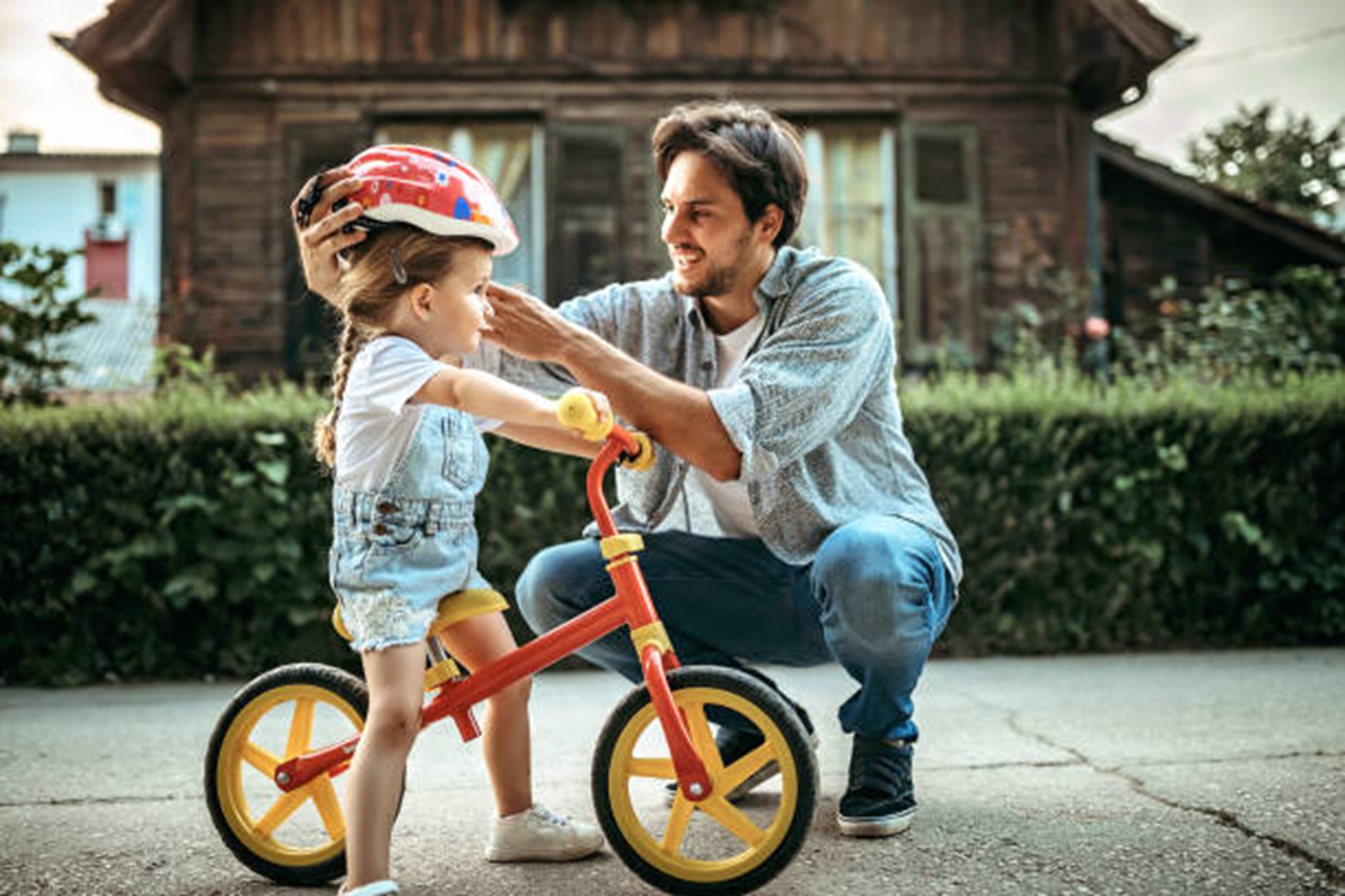
March is Brain Injury Awareness Month, led nationally by the Brain Injury Association of America. It’s an important reminder that while biking and rolling are great ways for kids to stay active, safety must come first! That starts with a properly fitted helmet.
A properly worn helmet can significantly reduce the risk of serious head injury in a crash. Children are especially vulnerable because their brains are still developing. Even a fall at low speed can result in a concussion or more severe traumatic brain injury.
The 3-Step Helmet Fit Check
Use the 2-2-1 rule for a quick safety check:
- 2 fingers above the eyebrows
The helmet should sit level on the head and low on the forehead. - 2 fingers form a “V” under each ear
Side straps should meet just below the ear. - 1 finger under the chin strap
The strap should be snug but comfortable.
When to Replace a Helmet
Replace a helmet if:
- It has been involved in a crash (even if damage isn’t visible).
- It is more than 5 years old.
- It no longer fits properly.
- The straps or shell are cracked or damaged.
Modeling Safe Behavior
Children are far more likely to wear helmets consistently when adults do. Parents, caregivers, and older siblings play a critical role in normalizing helmet use every ride!
Wearing a helmet is a simple step that makes a powerful difference. As we recognize Brain Injury Awareness Month, let’s commit to protecting riders and building a culture where safety is second nature.